





Sports Wear
High-performance fabrics

Wash durability, hand-feel and cost per piece for each customization technique.
Your logo is the part of the garment customers notice first. How it's applied affects how it looks on day one, how it feels against the skin and how it survives fifty trips through the wash. It also has a real impact on your unit cost.
Here's how the branding methods we use most compare, and how to pick the right one for each garment in your range.
Embroidery stitches thread directly into the fabric. It has a raised, premium look and is extremely durable. A well-digitised logo will usually outlast the garment itself.
It works best on heavier, stable fabrics like piqué polos, fleece, caps and woven jackets. On lightweight performance fabrics it can pucker, add stiffness and trap heat, and it isn't suitable for fine detail or small text. Cost depends on stitch count, so a large, dense logo costs noticeably more than a small one.
Screen printing pushes ink through a mesh screen onto the fabric, one colour at a time. It gives bold, solid colour and is very cost-effective at volume. Plastisol inks sit on top of the fabric, while water-based inks soak in for a softer hand.
The trade-off is setup. Each colour needs its own screen, so a five-colour design costs more to set up than a one-colour design. On stretch fabrics, the ink must be formulated to stretch too, or it can crack.
Heat transfers are printed onto a carrier film, then pressed onto the garment with heat and pressure. They're clean, flexible and ideal for performance fabrics, because they add very little weight and can stretch with the fabric. They're also used for names and numbers on teamwear.
Quality varies a lot by transfer type. A cheap transfer may peel at the edges after a few washes, while a good one can last the life of the garment.
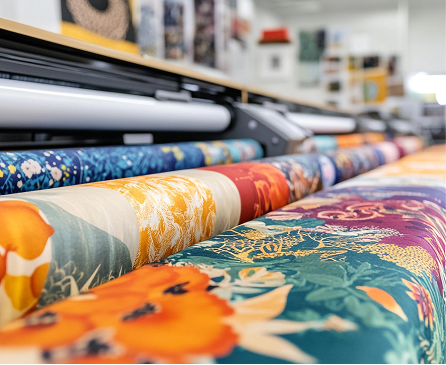
Sublimation turns dye into a gas that bonds with polyester fibers, so the design becomes part of the fabric. There's no feel at all, and the colour won't crack, peel or fade. It's how we make all-over prints on jerseys and cycling kit.
It only works on high-polyester, light-coloured fabrics. On cotton or dark bases, the colour simply won't take.
“The best branding method is the one that matches the fabric. Choose the garment first, then the logo technique.”
Silicone prints sit on the surface as raised, rubbery logos, popular on technical sportswear for their modern look and stretch. They're durable and flexible, but setup costs are higher.
Yes. A sublimated jersey with an embroidered crest, or a polo with an embroidered chest logo and a printed back, are both common.
Not if the right ink or transfer is used. We specify stretch inks and test printed panels for stretch and recovery before bulk.
Not directly. Sublimation needs polyester. For cotton, screen printing or embroidery is the right choice.
Yes. Branded samples go through wash testing before approval, so you can see how the logo holds up.
Send us your tech pack or a reference garment. We'll recommend a fabric and send swatches.
